Best Yoga Asanas for Glowing Skin: A Complete Guide to Naturally Healthy and Radiant Skin


Everyone wants naturally healthy, glowing skin, but achieving it isn’t just about using expensive skincare products. Your skin often reflects what’s happening inside your body. Factors such as stress, poor sleep, dehydration, hormonal changes, unhealthy eating habits, and a lack of physical activity can all affect your complexion.
Yoga offers a holistic approach to improving overall well-being, which may also contribute to healthier-looking skin. By encouraging relaxation, improving blood circulation, supporting better sleep, and helping manage stress, regular yoga practice can become a valuable part of a healthy lifestyle. While yoga isn’t a replacement for medical treatment or a proper skincare routine, it can complement both by promoting physical and mental wellness.
Whether you’re a beginner, someone looking to build a daily wellness routine, planning a pregnancy, or a new mother easing back into exercise, this guide will introduce easy yoga asanas, breathing techniques, and healthy lifestyle habits that may support naturally radiant skin.
Why Does Yoga Help Improve Skin Naturally?
Healthy skin isn’t just about external care—it also depends on your body’s overall health. Yoga works on the mind and body together, helping create conditions that support healthier skin over time.
Regular yoga practice may help by:
- Improving blood circulation, allowing oxygen and nutrients to reach skin cells more efficiently.
- Reducing stress, which may help minimize stress-related skin flare-ups.
- Supporting better sleep, giving the body time to repair and regenerate.
- Encouraging mindful breathing, which improves oxygen delivery throughout the body.
- Promoting flexibility and posture, contributing to overall physical wellness.
- Helping establish healthier lifestyle habits through consistent self-care.
Unlike quick beauty treatments, yoga encourages gradual improvements that support long-term health rather than temporary results. The World Health Organization (WHO) has also highlighted yoga as a practice that supports physical activity, mindfulness, flexibility, strength, mobility, and mental well-being, making it a valuable part of a healthy lifestyle for people of different ages
Expert Tip
Consistency matters more than intensity. Practicing yoga for 20–30 minutes most days of the week is often more beneficial than doing long, infrequent sessions.
How Yoga Supports Naturally Healthy and Glowing Skin
Many people wonder whether yoga can actually improve their skin. While scientific research doesn’t support claims that yoga alone can “cure” acne or permanently transform the skin, it does support several aspects of overall health that can influence skin appearance.
Improved Blood Circulation
Yoga encourages movement and stretching that help improve circulation throughout the body. Healthy blood flow delivers oxygen and nutrients to tissues, including the skin, while helping remove metabolic waste products.
Reduced Stress
Chronic stress can affect overall health and may contribute to skin concerns in some people. Relaxation techniques used in yoga, including controlled breathing and meditation, help many individuals feel calmer and manage everyday stress more effectively.
Better Sleep
Sleep plays an essential role in tissue repair and overall wellness. A regular yoga routine may help some people relax before bedtime and improve sleep quality, supporting the body’s natural recovery processes.
Mindful Breathing
Breathing exercises used in yoga encourage slower, deeper breathing that promotes relaxation and supports overall well-being.
Healthier Lifestyle Habits
People who practice yoga regularly often become more mindful of other healthy habits, including balanced nutrition, hydration, stress management, and regular physical activity—all of which contribute to healthier-looking skin.
Before You Begin Your Yoga Practice
Whether you’re completely new to yoga or returning after a long break, preparing properly helps make your practice safer and more enjoyable.
Before starting:
- Wear comfortable, breathable clothing.
- Practice on a non-slip yoga mat.
- Choose a quiet, well-ventilated space.
- Stay hydrated throughout the day.
- Practice on an empty stomach or wait at least 2–3 hours after a large meal.
- Move slowly and never force a pose.
- Listen to your body and stop if you feel pain.
Safety Note
If you have chronic medical conditions, recent surgery, joint injuries, or are pregnant, consult your healthcare provider before beginning a new yoga routine.
Quick Comparison of the Best Yoga Asanas for Glowing Skin
| Yoga Pose | Difficulty | Primary Benefit | Recommended For |
|---|---|---|---|
| Tadasana | Beginner | Posture & breathing | Beginners |
| Bhujangasana | Beginner | Chest opening & flexibility | Daily practice |
| Trikonasana | Beginner | Balance & circulation | Flexibility |
| Adho Mukha Svanasana | Beginner–Intermediate | Full-body stretch | Strength & flexibility |
| Balasana | Beginner | Relaxation | Stress relief |
| Setu Bandhasana | Beginner | Back strength | Posture improvement |
| Viparita Karani | Beginner | Relaxation & recovery | Evening routine |
| Matsyasana | Intermediate | Chest opening | Deep breathing |
| Sarvangasana | Advanced | Inversion practice | Experienced practitioners |
| Halasana | Advanced | Flexibility | Advanced practitioners |
Tip: If you’re new to yoga, start with beginner-friendly poses such as Tadasana, Balasana, Bhujangasana, Setu Bandhasana, and Viparita Karani before progressing to intermediate or advanced poses.
10 Best Yoga Asanas for Glowing Skin
These beginner-friendly yoga poses support overall wellness and may contribute to healthier-looking skin when practiced consistently as part of a balanced lifestyle.
1. Tadasana (Mountain Pose)

Why It Helps
Although it appears simple, Tadasana forms the foundation of many yoga practices. It promotes good posture, improves body awareness, and encourages steady breathing.
How to Perform Tadasana
- Stand with your feet together or hip-width apart.
- Keep your spine straight and shoulders relaxed.
- Distribute your weight evenly on both feet.
- Engage your core muscles gently.
- Raise your arms overhead if comfortable.
- Take slow, deep breaths for 30–60 seconds.
Benefits
- Improves posture.
- Encourages better breathing.
- Enhances body awareness.
- Promotes relaxation.
Beginner Tip
Focus on slow, steady breathing rather than trying to hold the pose for a long time.
Common Mistake
Avoid locking your knees or tensing your shoulders.
Expert Tip
Practice Tadasana for a minute before beginning other yoga poses to improve balance and concentration.
2. Bhujangasana (Cobra Pose)

Bhujangasana, also known as Cobra Pose, is a gentle backbend that stretches the chest, shoulders, and abdomen while strengthening the muscles along the spine. It encourages an open posture and deep breathing, making it a popular pose in many yoga routines.
Although yoga does not directly create glowing skin, practicing Bhujangasana as part of a balanced routine may support overall well-being by promoting relaxation, improving posture, and encouraging healthy circulation.
How to Perform Bhujangasana
- Lie face down on a yoga mat with your legs extended behind you.
- Place your palms under your shoulders and keep your elbows close to your body.
- Inhale as you gently lift your chest using your back muscles while applying only light pressure through your hands.
- Keep your shoulders relaxed and away from your ears.
- Hold the pose for 15–30 seconds while breathing normally.
- Exhale slowly and lower your chest back to the mat.
Potential Benefits
- Opens the chest and shoulders
- Helps strengthen the back muscles
- Encourages better posture
- Supports deep breathing and relaxation
- May contribute to overall wellness when practiced regularly
Safety Tip
Avoid Bhujangasana if you have a recent back injury, severe spinal problems, or have been advised by a healthcare professional to avoid backbends. Move within a comfortable range and stop if you experience pain.
3. Trikonasana (Triangle Pose)

Why It Helps
Trikonasana is a standing yoga pose that stretches the entire body while improving balance, flexibility, and posture. It also encourages healthy blood circulation and helps release tension from the shoulders, hips, and back. Regular practice may contribute to overall well-being, which can support healthier-looking skin.
How to Perform Trikonasana
- Stand with your feet about 3–4 feet apart.
- Turn your right foot outward at a 90-degree angle and your left foot slightly inward.
- Extend both arms parallel to the floor.
- Slowly bend sideways from your hips toward your right foot.
- Place your right hand on your shin, ankle, or the floor if comfortable.
- Extend your left arm toward the ceiling and look upward if your neck feels comfortable.
- Hold the pose for 20–30 seconds while breathing normally.
- Return to the starting position and repeat on the opposite side.
Benefits
- Improves flexibility.
- Encourages better posture.
- Supports balance and coordination.
- Promotes healthy blood circulation.
- Gently stretches the hips, legs, and spine.
Beginner Tip
Use a yoga block under your lower hand if you cannot comfortably reach the floor.
Common Mistakes
- Leaning forward instead of sideways.
- Locking the knees.
- Collapsing the chest.
- Straining the neck while looking upward.
Expert Tip
Focus on lengthening both sides of your torso instead of reaching as low as possible.
Safety Note
Avoid this pose if you have severe dizziness, recent hip injuries, or uncontrolled low blood pressure unless advised by your healthcare provider.
4. Adho Mukha Svanasana (Downward-Facing Dog)

Why It Helps
One of the most recognized yoga poses, Downward-Facing Dog stretches the entire body while strengthening the arms, shoulders, and legs. It also encourages circulation and helps relieve stiffness after long periods of sitting.
How to Perform
- Start on your hands and knees.
- Place your hands shoulder-width apart.
- Tuck your toes under.
- Lift your hips toward the ceiling.
- Keep your spine long.
- Allow your heels to move toward the floor without forcing them.
- Relax your neck.
- Hold for 20–40 seconds.
Benefits
- Strengthens the upper body.
- Improves flexibility.
- Encourages circulation.
- Relieves muscle tension.
- Supports better posture.
Beginner Tip
It’s perfectly fine to keep your knees slightly bent while you build flexibility.
Common Mistakes
- Rounding the back.
- Putting too much weight on the wrists.
- Forcing the heels to touch the floor.
Expert Tip
Rather than focusing on straight legs, prioritize keeping your spine long and your breathing steady.
Safety Note
Avoid or modify this pose if you have wrist injuries, uncontrolled high blood pressure, glaucoma, or shoulder problems.
5. Sarvangasana (Shoulder Stand)
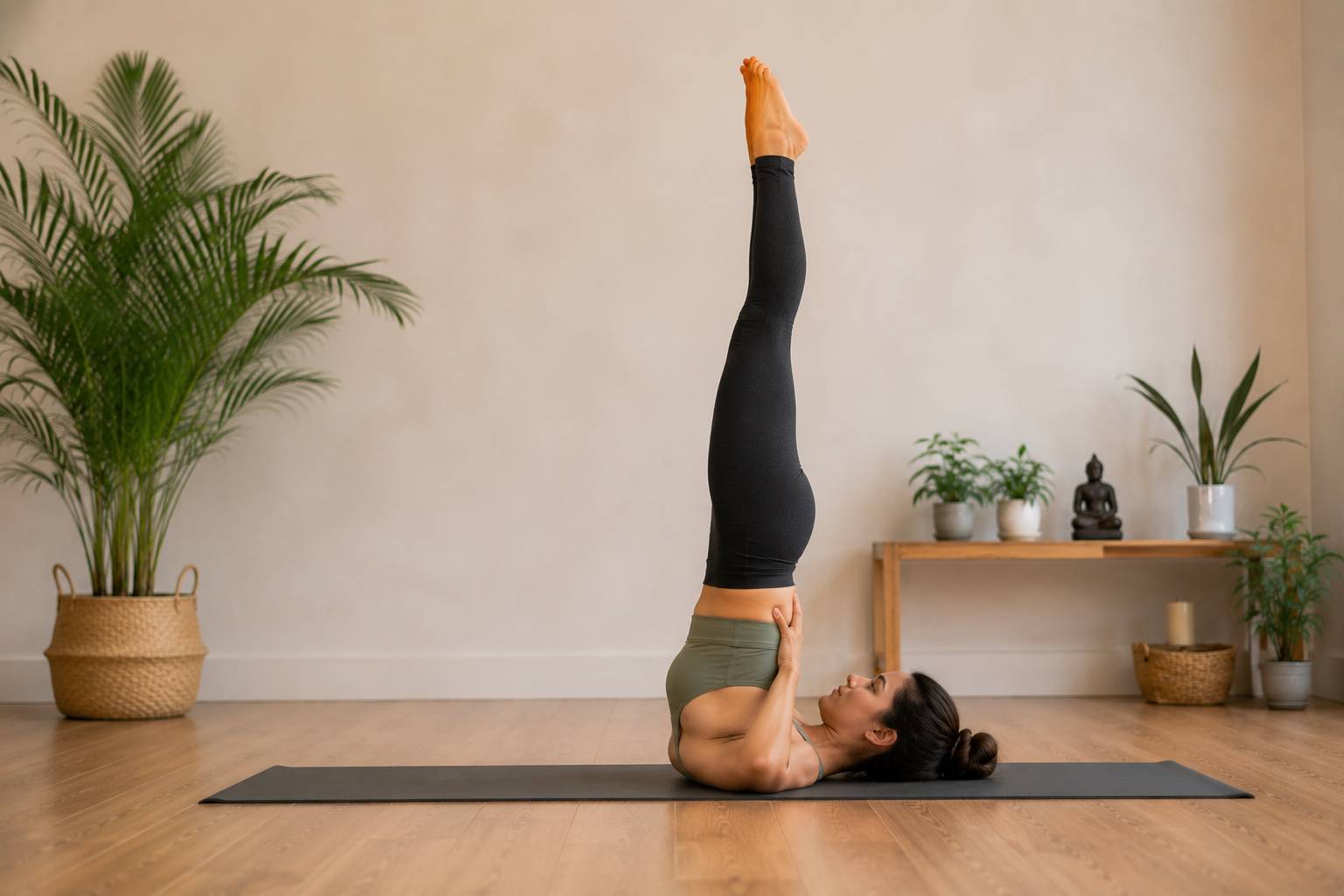
Why It Helps
Sarvangasana is often called the “Queen of Asanas” because it engages many parts of the body. It encourages balance, flexibility, and body awareness. Due to its inverted position, it should only be practiced by individuals who are comfortable with intermediate yoga poses.
How to Perform
- Lie flat on your back.
- Lift both legs together.
- Raise your hips while supporting your lower back with both hands.
- Extend your legs upward.
- Keep your body as straight as possible.
- Hold for 15–30 seconds while breathing comfortably.
- Lower your body slowly with control.
Benefits
- Improves balance.
- Strengthens the shoulders and core.
- Encourages body awareness.
- Supports flexibility.
Beginner Tip
Practice under the supervision of a qualified yoga instructor until you become familiar with proper alignment.
Common Mistakes
- Turning the head while in the pose.
- Supporting weight on the neck instead of the shoulders.
- Rushing into or out of the posture.
Expert Tip
Use a folded blanket beneath your shoulders to reduce pressure on the neck if recommended by your instructor.
Safety Note
This pose is not suitable for beginners without guidance and should be avoided during pregnancy, after recent surgery, or by people with neck injuries, glaucoma, uncontrolled hypertension, or certain cardiovascular conditions.
6. Halasana (Plow Pose)
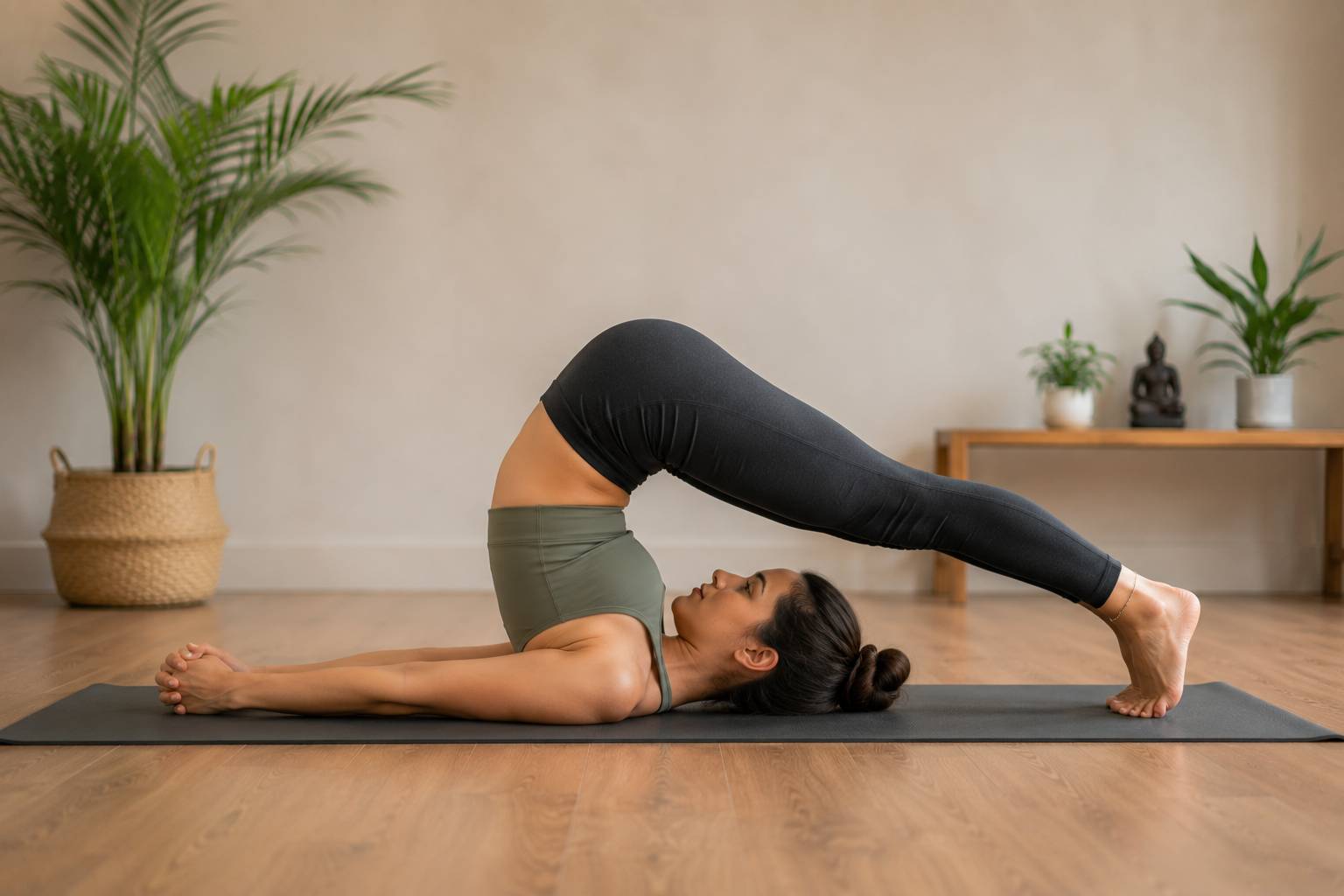
Why It Helps
Halasana provides a deep stretch for the back, shoulders, and legs while encouraging flexibility and relaxation. It is generally considered an intermediate yoga pose.
How to Perform
- Begin by lying on your back.
- Lift both legs toward the ceiling.
- Slowly bring your legs over your head until your toes move toward the floor.
- Keep your hands flat on the floor or support your lower back if needed.
- Hold the pose for 15–30 seconds.
- Return slowly with controlled movement.
Benefits
- Improves spinal flexibility.
- Gently stretches the shoulders.
- Encourages relaxation.
- Helps improve posture.
Beginner Tip
Do not force your feet to touch the floor. Practice gradually and use props if recommended by your instructor.
Common Mistakes
- Rolling into the pose too quickly.
- Placing excessive pressure on the neck.
- Holding the breath.
Expert Tip
Controlled entry and exit are just as important as the pose itself. Move slowly and breathe naturally throughout.
Safety Note
Avoid Halasana if you have neck injuries, spinal problems, uncontrolled high blood pressure, glaucoma, or if you are pregnant.
7. Balasana (Child’s Pose)

Why It Helps
Balasana is one of the most relaxing yoga poses and is suitable for almost everyone, including beginners. It gently stretches the hips, thighs, ankles, and lower back while encouraging deep breathing and relaxation. Since stress can affect overall well-being, taking time to relax may indirectly support healthier-looking skin.
How to Perform
- Kneel on your yoga mat with your knees slightly apart.
- Sit back on your heels.
- Slowly bend forward and extend your arms in front of you.
- Rest your forehead comfortably on the mat.
- Relax your shoulders and breathe slowly.
- Hold the pose for 30–60 seconds.
Benefits
- Promotes relaxation.
- Gently stretches the back and hips.
- Encourages deep breathing.
- Helps relieve tension after a busy day.
- Suitable for beginners.
Beginner Tip
Place a cushion or folded blanket under your forehead if it’s difficult to reach the floor comfortably.
Common Mistakes
- Holding your breath.
- Raising your shoulders.
- Forcing your hips to touch your heels.
Expert Tip
Practice Balasana whenever you feel tired during your yoga session. It serves as an excellent resting pose between more active asanas.
Safety Note
If you have knee injuries or severe hip pain, modify the pose using cushions or consult a qualified yoga instructor.
8. Setu Bandhasana (Bridge Pose)

Why It Helps
Bridge Pose gently opens the chest, strengthens the back, and improves flexibility. It also encourages better posture and can help relieve stiffness caused by prolonged sitting.
How to Perform
- Lie flat on your back.
- Bend your knees and place your feet hip-width apart.
- Keep your arms beside your body.
- Press your feet into the floor.
- Slowly lift your hips upward.
- Hold the position for 20–30 seconds.
- Lower your hips slowly.
Benefits
- Strengthens the back and legs.
- Improves flexibility.
- Opens the chest.
- Encourages good posture.
- Helps relieve lower back stiffness.
Beginner Tip
Lift your hips only as high as feels comfortable.
Common Mistakes
- Turning the head.
- Overarching the lower back.
- Placing feet too far from the hips.
Expert Tip
Engage your abdominal muscles gently while lifting your hips to support your lower back.
Safety Note
Avoid this pose if you have recent spinal injuries or severe neck pain unless approved by your healthcare provider.
9. Viparita Karani (Legs-Up-the-Wall Pose)
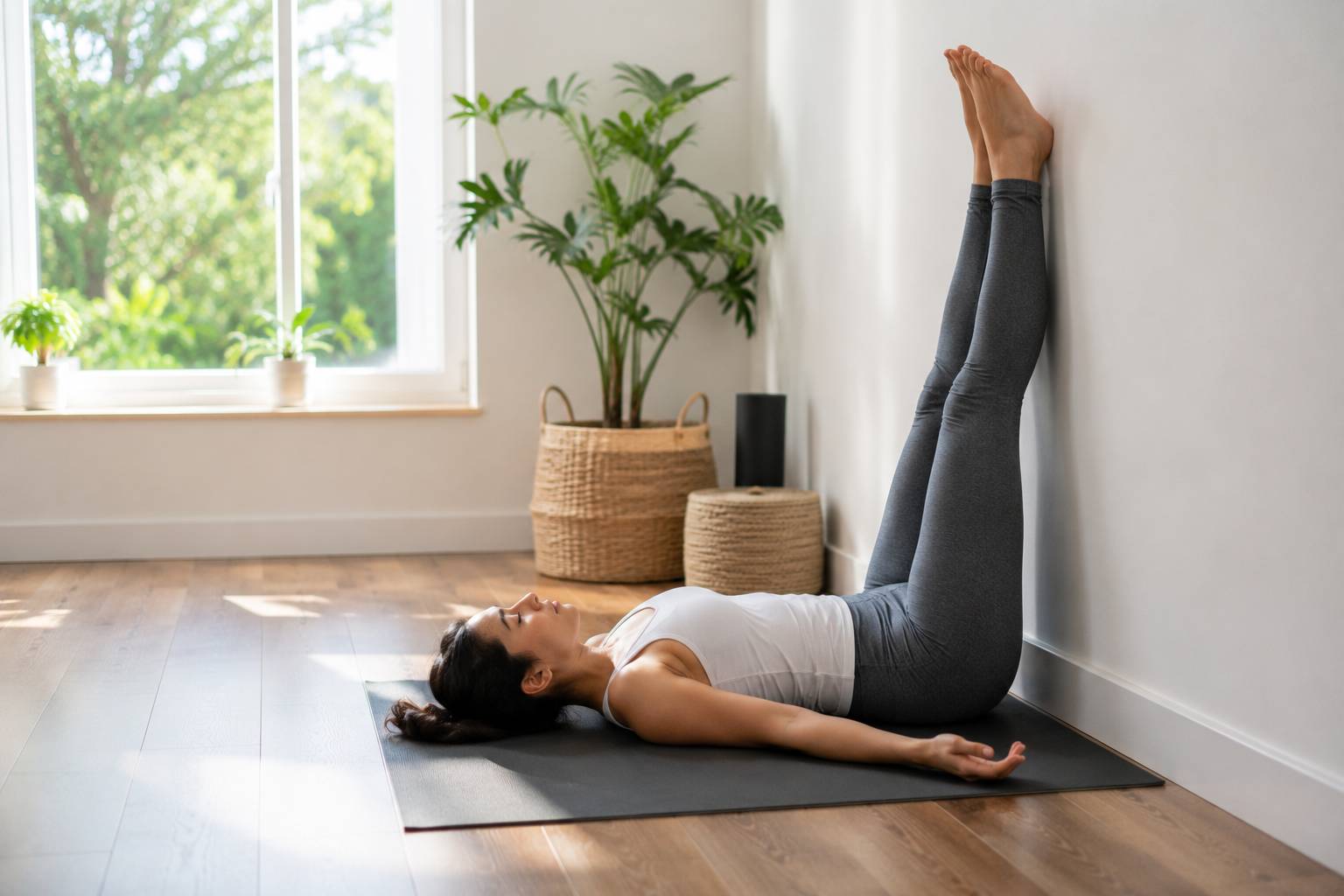
Why It Helps
Viparita Karani is a gentle restorative yoga pose that promotes relaxation and helps reduce fatigue after long hours of standing or sitting. It’s one of the easiest poses for beginners and is often included in restorative yoga practices.
How to Perform
- Sit sideways against a wall.
- Lie on your back while swinging your legs up the wall.
- Keep your arms relaxed by your sides.
- Close your eyes.
- Breathe naturally for 5–10 minutes.
Benefits
- Promotes relaxation.
- Helps reduce tired legs.
- Encourages gentle circulation.
- Supports stress management.
- Suitable for most beginners.
Beginner Tip
Place a folded blanket under your hips if it feels more comfortable.
Common Mistakes
- Sitting too far from the wall.
- Tensing the shoulders.
- Holding the breath.
Expert Tip
Practice this pose before bedtime to help your body unwind after a busy day.
Safety Note
Avoid prolonged inversions if advised by your healthcare provider due to glaucoma, certain heart conditions, or uncontrolled high blood pressure.
10. Matsyasana (Fish Pose)
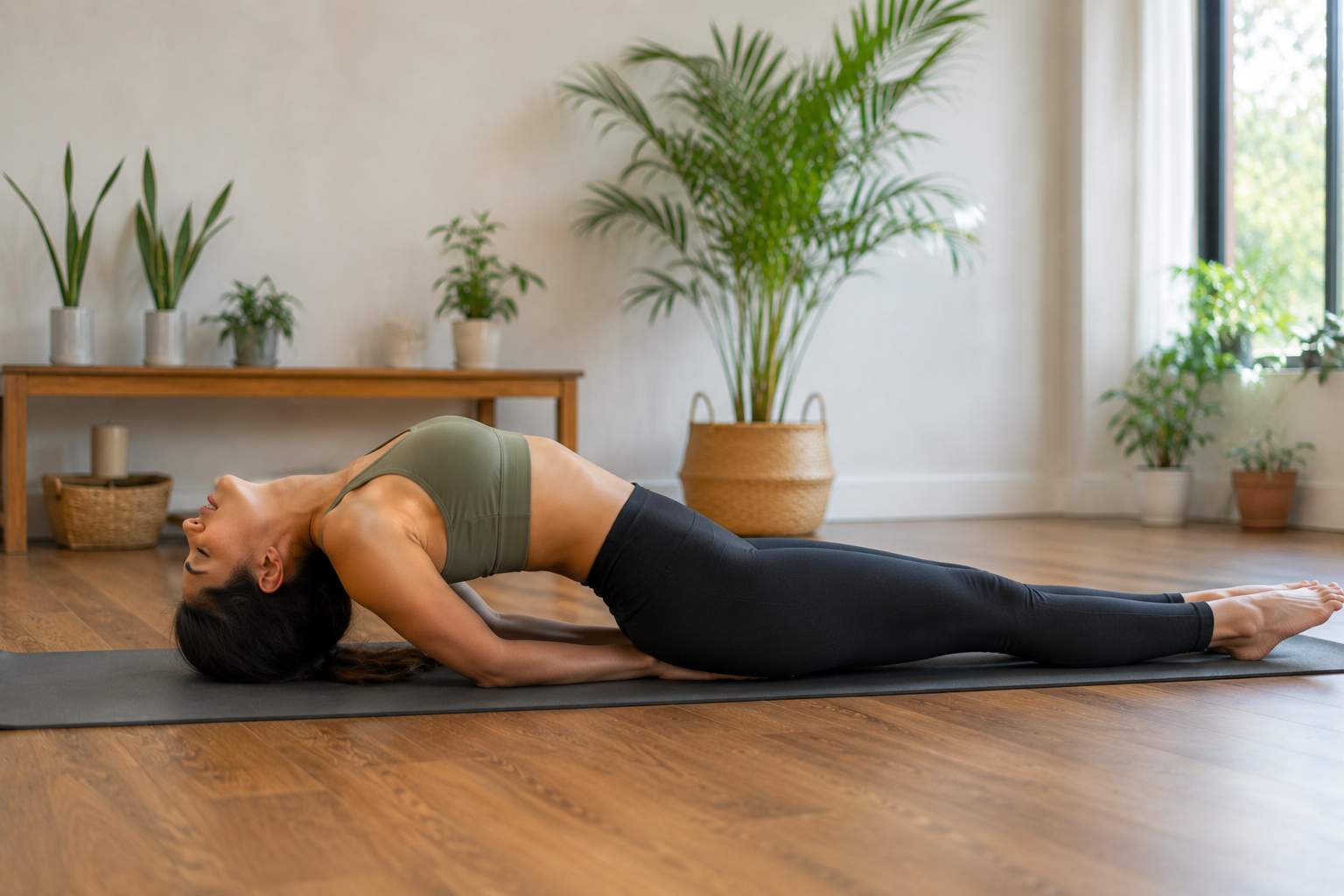
Why It Helps
Matsyasana is a gentle backbend that opens the chest and stretches the front of the body. It is often practiced after shoulder stand variations as part of a balanced yoga sequence.
How to Perform
- Lie flat on your back.
- Keep your legs together.
- Place your hands beneath your hips.
- Press your elbows into the floor.
- Lift your chest upward while gently tilting your head back.
- Rest the crown of your head lightly on the mat without placing weight on your neck.
- Hold for 15–30 seconds.
Benefits
- Opens the chest.
- Improves flexibility.
- Encourages better posture.
- Promotes deep breathing.
- Complements other back-strengthening poses.
Beginner Tip
Support your upper back with a yoga bolster or folded blanket if needed.
Common Mistakes
- Placing excessive weight on the head.
- Arching the back too aggressively.
- Holding the breath.
Expert Tip
Think of lifting your chest toward the ceiling rather than pushing your head backward.
Safety Note
Avoid this pose if you have neck injuries, uncontrolled migraines, or recent spinal surgery without medical clearance.
Best Breathing Exercises (Pranayama) for Healthy Skin and Overall Wellness
While yoga postures improve flexibility and strength, Pranayama focuses on controlled breathing. Deep, mindful breathing helps calm the nervous system, encourages relaxation, and supports overall well-being. Since stress is one of the factors that can affect skin health, incorporating breathing exercises into your routine can complement your yoga practice.
Below are four beginner-friendly breathing techniques that are easy to learn and can be practiced almost anywhere.
1. Anulom Vilom (Alternate Nostril Breathing)

Why It Helps
Anulom Vilom is one of the most popular breathing exercises in yoga. It promotes calmness, encourages mindful breathing, and helps many people relax after a busy day.
How to Practice
- Sit comfortably with your spine straight.
- Rest your left hand on your knee.
- Use your right thumb to gently close your right nostril.
- Inhale slowly through your left nostril.
- Close your left nostril with your ring finger.
- Release your right nostril and exhale.
- Inhale through the right nostril.
- Switch sides and continue for 5–10 minutes.
Benefits
- Encourages relaxation.
- Promotes mindful breathing.
- Helps improve concentration.
- Supports stress management.
- Suitable for beginners.
Beginner Tip
Start with slow, natural breathing rather than trying to control the rhythm too much.
Expert Tip
Practice in a quiet environment where you can focus on your breathing without distractions.
Safety Note
Avoid forcing your breath. If you have difficulty breathing or chronic respiratory conditions, seek guidance from your healthcare provider.
2. Bhramari Pranayama (Bee Breath)
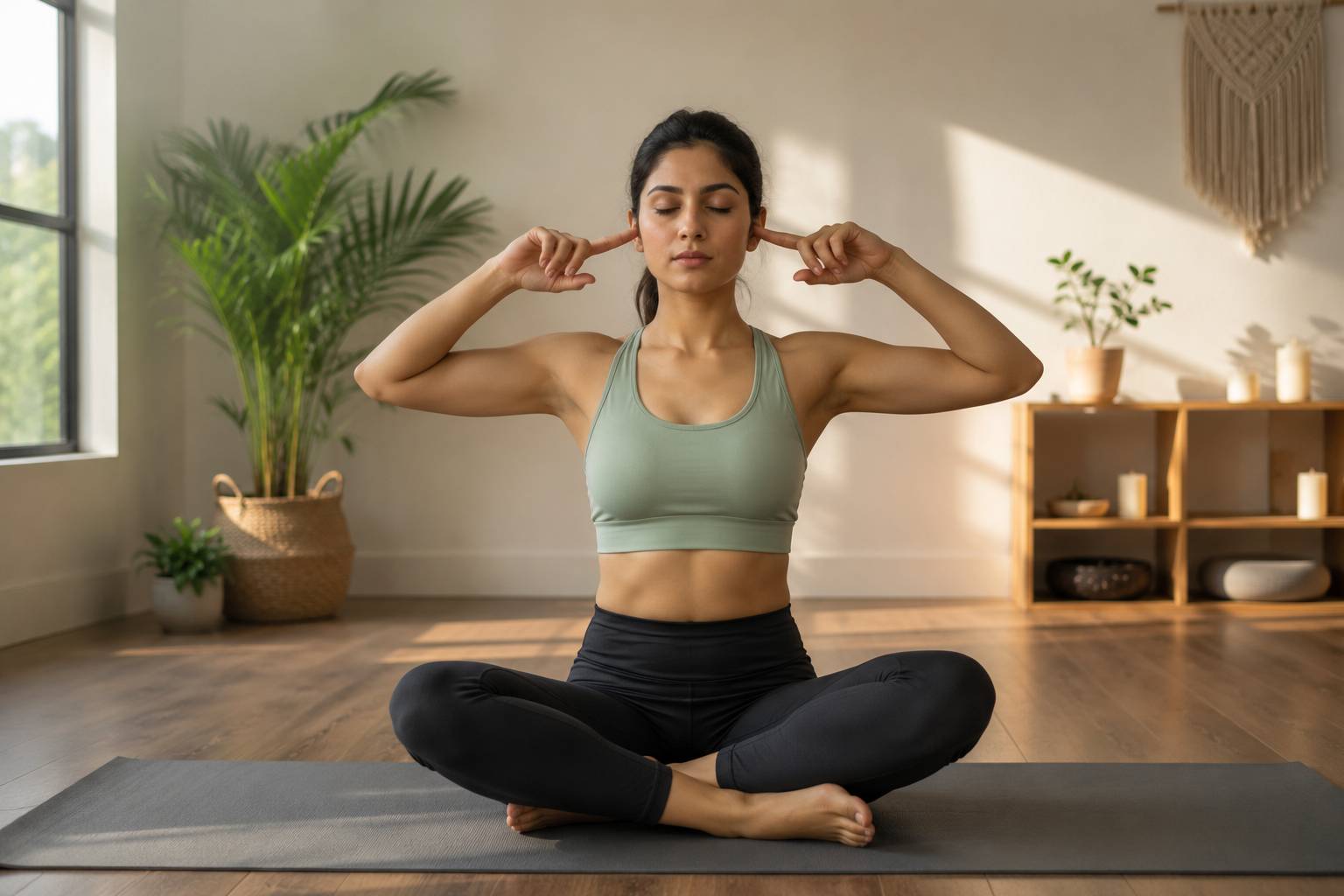
Why It Helps
Bhramari involves producing a gentle humming sound during exhalation. Many people find it deeply calming and use it to unwind after stressful days.
How to Practice
- Sit comfortably.
- Close your eyes.
- Place your fingertips lightly on your face if comfortable.
- Take a slow breath in.
- Exhale while making a soft humming sound.
- Repeat for 5–10 rounds.
Benefits
- Encourages relaxation.
- Helps calm the mind.
- Supports emotional well-being.
- Easy for beginners.
Beginner Tip
Keep the humming gentle rather than loud.
Expert Tip
Practicing Bhramari before bedtime may help create a calming bedtime routine.
Safety Note
Stop immediately if you feel dizzy or uncomfortable.
3. Nadi Shodhana (Alternate Channel Breathing)
Why It Helps
Nadi Shodhana is another gentle breathing practice that encourages slow, balanced breathing and relaxation.
How to Practice
- Sit comfortably.
- Close one nostril.
- Inhale slowly.
- Switch nostrils.
- Exhale.
- Continue alternating for several minutes.
Benefits
- Encourages mindfulness.
- Supports emotional balance.
- Helps reduce everyday stress.
- Promotes relaxation.
Beginner Tip
Practice for 3–5 minutes before gradually increasing the duration.
4. Diaphragmatic Breathing (Deep Belly Breathing)
Why It Helps
Deep belly breathing encourages full use of the diaphragm and is one of the easiest breathing techniques for beginners.
How to Practice
- Sit or lie comfortably.
- Place one hand on your chest and the other on your abdomen.
- Inhale slowly through your nose.
- Allow your abdomen to rise.
- Exhale gently through your mouth.
- Repeat for 5–10 minutes.
Benefits
- Promotes relaxation.
- Encourages healthy breathing habits.
- Supports stress management.
- Suitable for all experience levels.
Expert Tip
Spend a few minutes practicing diaphragmatic breathing before beginning your yoga session to improve focus.
Can Post-Pregnancy Yoga Help Improve Overall Well-being and Skin Health?

Becoming a new mother brings many physical and emotional changes. Hormonal fluctuations, interrupted sleep, stress, and the demands of caring for a newborn can affect energy levels and may also influence the appearance of your skin. While yoga isn’t a treatment for skin concerns, gentle postpartum yoga can support overall recovery and help many women prioritize self-care during this important stage of life.
Once your healthcare provider confirms it’s safe to resume physical activity, gentle yoga can help you gradually rebuild strength, improve flexibility, and reduce everyday stress. The American College of Obstetricians and Gynecologists (ACOG) recommends gradually returning to physical activity after childbirth based on each person’s recovery and medical guidance. As you recover after childbirth, you may also find our guide on postpartum parenting journey helpful for understanding physical recovery, emotional well-being, and self-care during the early weeks of parenthood.
Benefits of Postpartum Yoga
- Encourages relaxation and emotional well-being.
- Helps improve posture after pregnancy.
- Supports gentle core and back strengthening.
- Promotes flexibility.
- May help improve sleep quality and reduce stress.
- Creates valuable self-care time for new mothers.
It’s also important to recognize emotional changes after childbirth. Learn about the 5 major signs of postpartum depression and when it’s time to seek professional support.
Parent Tip
Even a 15–20 minute yoga session while your baby is sleeping can become a refreshing part of your daily routine. Consistency is far more important than long workouts.
Beginner-Friendly Postpartum Yoga Poses
If your healthcare provider has cleared you for exercise, consider starting with:
- Balasana (Child’s Pose)
- Cat-Cow Stretch
- Setu Bandhasana (Bridge Pose)
- Viparita Karani (Legs-Up-the-Wall Pose)
- Gentle seated stretches
- Deep breathing exercises
These poses are generally gentle and can help ease your body back into regular movement.
If you’re breastfeeding during your postpartum recovery, choosing the right equipment can make feeding more comfortable. Read our guide on how to choose the right breast pump to understand the different options available and find one that suits your needs.
Safety Note
Avoid advanced yoga poses until your body has recovered. Women who have had a cesarean birth, significant abdominal separation (diastasis recti), pelvic floor concerns, or pregnancy complications should seek personalized advice from their healthcare provider or a qualified physiotherapist before beginning postpartum exercise.
Healthy Lifestyle Habits That Complement Your Yoga Practice

Yoga works best when combined with other healthy lifestyle habits. Together, these practices support overall wellness and may contribute to healthier-looking skin over time.
Stay Hydrated
Drinking enough water supports normal body functions and helps maintain healthy skin. Keep a water bottle nearby during the day, especially if you’re physically active.
Eat a Nutrient-Rich Diet
A balanced diet provides vitamins, minerals, healthy fats, and antioxidants that support your body’s natural functions. Healthy eating habits benefit the entire family. Explore our 9 tips for sneaking veggies into your kids’ diets for practical ideas to encourage nutritious meals.
Consider including:
- Fresh fruits
- Colourful vegetables
- Whole grains
- Lean proteins
- Nuts and seeds
- Healthy fats
Preparing nutritious meals also means following safe food handling practices. Read our guide on food safety rules every young child should learn to help keep your family’s meals safe and healthy.
Prioritize Sleep
Your body performs many important repair processes while you sleep. Although getting uninterrupted sleep isn’t always possible—especially for new parents—creating a consistent bedtime routine may help improve sleep quality.
For parents caring for young children, understanding healthy sleep routines can also make a difference. Learn the difference between sleep tracking and baby monitoring to support better family sleep habits.
The NHS also emphasizes that good sleep, healthy eating, and regular physical activity all contribute to overall health and well-being.
Manage Daily Stress
Long-term stress can affect both physical and emotional well-being. Along with yoga, activities such as meditation, walking, reading, journaling, or spending time outdoors can help reduce everyday stress.
Follow a Gentle Skincare Routine
Healthy skin benefits from regular cleansing, moisturizing, and sun protection. Yoga should complement—not replace—a skincare routine that suits your skin type. The American Academy of Dermatology recommends following a gentle skincare routine appropriate for your skin type while protecting your skin from excessive sun exposure.
Be Consistent
Visible changes from healthy habits often take time. Practicing yoga regularly while maintaining a balanced lifestyle is more effective than expecting immediate results from occasional sessions.
Expert Tip
Think of yoga as part of your overall wellness routine rather than a quick beauty solution. Healthy skin is often the result of consistent healthy habits working together.
Common Mistakes to Avoid
Many beginners unknowingly make mistakes that reduce the effectiveness of their yoga practice or increase the risk of injury.
Skipping Warm-Up Exercises
Always prepare your muscles with gentle stretches before attempting more challenging poses.
Holding Your Breath
Steady, relaxed breathing is an essential part of yoga. Avoid holding your breath during poses.
Comparing Yourself to Others
Yoga is a personal practice. Progress at your own pace rather than trying to copy advanced practitioners.
Ignoring Pain
Stretching should never cause sharp pain. Stop immediately if a movement feels uncomfortable or painful.
Expecting Overnight Results
Healthy skin develops gradually through consistent self-care, healthy eating, hydration, quality sleep, and regular physical activity.
Practicing Without Proper Guidance
Beginners may benefit from learning the basics through a qualified yoga instructor before attempting advanced poses independently.
Safety Note
If you experience persistent pain, dizziness, breathing difficulties, or unusual symptoms during exercise, stop practicing and consult a healthcare professional.
Frequently Asked Questions
Can yoga really make your skin glow?
Yoga supports overall wellness by encouraging relaxation, healthy circulation, and stress management. While it doesn’t directly change skin colour or cure skin conditions, these healthy habits may contribute to healthier-looking skin over time.
Which yoga pose is best for glowing skin?
There isn’t a single “best” pose. A balanced routine that includes poses such as Tadasana, Bhujangasana, Trikonasana, Balasana, and breathing exercises is generally more beneficial than relying on one posture alone.
How often should I practice yoga?
Many people benefit from practicing yoga for 20–30 minutes, 4–5 days per week. Consistency is usually more important than long, infrequent sessions.
Can beginners practice these yoga poses?
Yes. Most poses in this guide are beginner-friendly. However, advanced poses such as Sarvangasana and Halasana should ideally be learned under professional guidance.
Is yoga better than skincare products?
Yoga and skincare serve different purposes. Yoga supports overall wellness, while a suitable skincare routine helps maintain skin health. The two approaches work well together.
Can yoga help reduce stress-related skin concerns?
Stress management techniques, including yoga and mindful breathing, may help support emotional well-being. Since stress can influence certain skin conditions, reducing stress may benefit some individuals.
Is yoga safe during pregnancy?
Some yoga poses are suitable during pregnancy, but routines should always be adapted for each stage of pregnancy. Consult your healthcare provider and choose classes designed specifically for prenatal yoga.
When can I start yoga after childbirth?
The right time varies for each person. Your healthcare provider can advise when it’s safe to resume physical activity based on your recovery and delivery.
Do I need expensive equipment to practice yoga?
No. A comfortable yoga mat and loose, breathable clothing are enough for most beginners.
Can yoga replace medical treatment for skin conditions?
No. Yoga supports overall health but should not replace professional medical advice or treatment for persistent skin conditions such as eczema, psoriasis, severe acne, or other dermatological concerns.
Final Thoughts
Healthy, glowing skin is influenced by many factors, including nutrition, hydration, sleep, stress management, physical activity, and skincare habits. Yoga offers a holistic approach that supports overall well-being, helping you develop healthy routines that may positively influence your skin over time.
Whether you’re just beginning your yoga journey, preparing for pregnancy, or returning to exercise after childbirth, the key is to start gradually, practice consistently, and listen to your body. Remember that lasting results come from building sustainable habits rather than looking for quick fixes.
By combining regular yoga practice with a balanced lifestyle, you can support not only healthier-looking skin but also greater physical and emotional well-being.
Medical Disclaimer
This article is intended for educational purposes only and should not be considered medical advice. Yoga supports general health and well-being but does not replace professional diagnosis or treatment for medical or skin conditions. Always consult a qualified healthcare professional before beginning a new exercise program, especially if you are pregnant, recovering after childbirth, have a chronic medical condition, or are experiencing persistent skin concerns.