Choosing packaged food for your baby can feel overwhelming, especially when supermarket shelves are filled with products making claims like “Organic”, “Natural”, or “No Added Sugar”. As a parent, it’s important to look beyond the front of the package and understand what the label is really telling you.
Reading baby food packaging labels isn’t just about checking the expiry date. It helps you understand the ingredients, nutritional value, serving size, allergens, and whether a product is suitable for your baby’s age and developmental stage.
By learning how to read labels correctly, you can make informed choices that support your baby’s healthy growth while avoiding unnecessary sugars, excess sodium, artificial additives, and misleading marketing claims.
This guide explains everything parents need to know about baby food labels in simple language, helping you shop with confidence every time.
Why Reading Baby Food Labels Matters
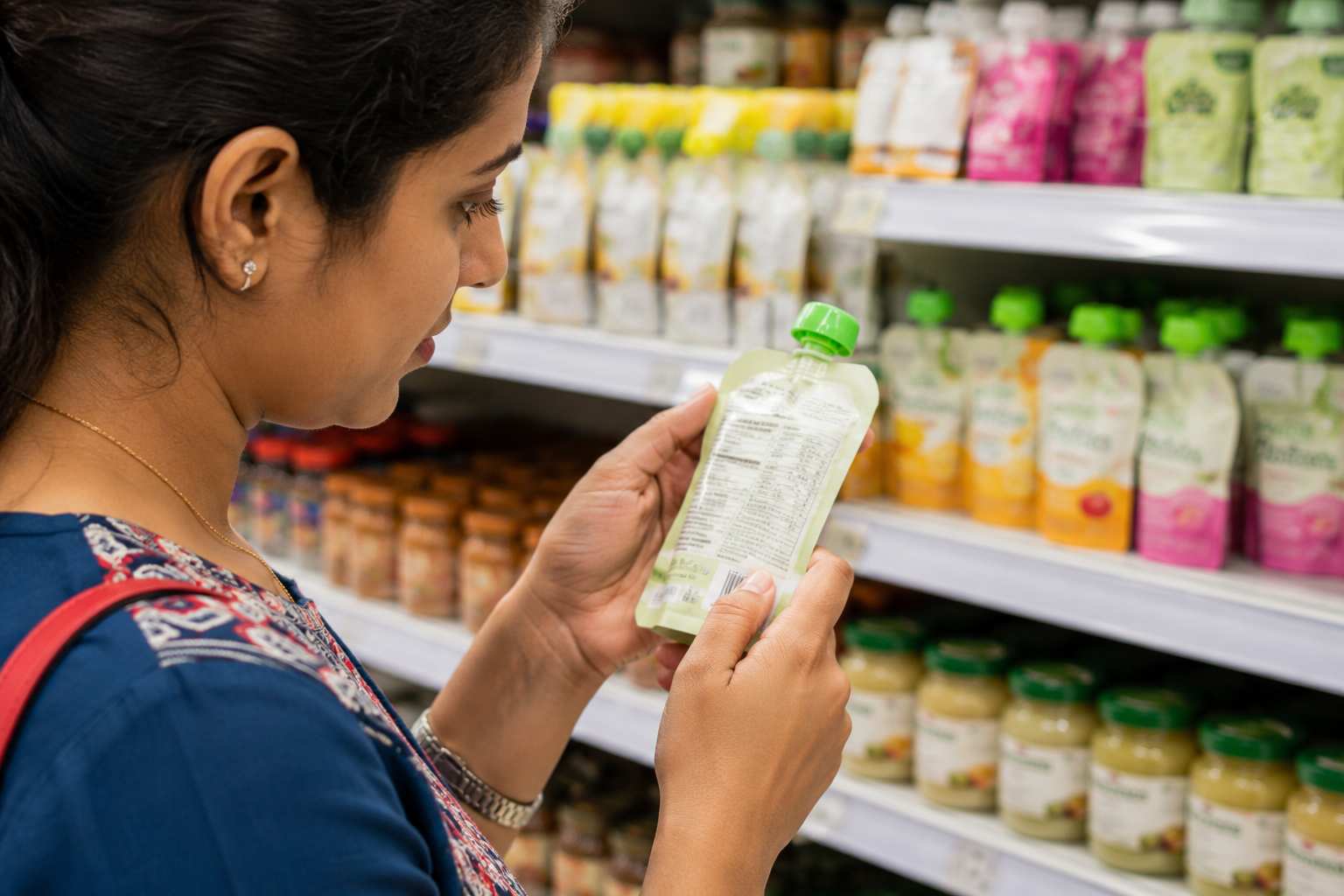
During the first year of life, babies grow rapidly and need balanced nutrition to support their physical and cognitive development. While homemade food is often the preferred choice, packaged baby foods can be a convenient option for busy families when selected carefully.
Unfortunately, many parents rely only on the attractive claims printed on the front of the package. These claims don’t always tell the full story. The ingredient list, nutrition facts panel, serving size, and storage instructions provide much more valuable information.
Reading labels carefully can help you:
- Choose foods with wholesome ingredients.
- Avoid unnecessary added sugars and excess salt.
- Identify common allergens.
- Compare similar products before buying.
- Select age-appropriate foods for your baby.
- Build healthy eating habits from an early age.
Taking a few extra moments to read the label can make a significant difference in your baby’s overall nutrition.
What Should Parents Check Before Buying Packaged Baby Food?
Before placing any packaged baby food into your shopping cart, check these essential details.
Recommended Age
Most baby foods clearly mention the recommended age group, such as 6+ months, 8+ months, or 12+ months.
These recommendations are based on a baby’s developmental readiness, including chewing ability, swallowing skills, and nutritional needs. Always choose products suitable for your baby’s age.
Ingredient List
The ingredient list is often more important than the colourful marketing messages on the front of the package.
Ingredients are listed in descending order by weight. This means the first few ingredients make up the largest portion of the product.
For example:
Better Choice
- Apple
- Banana
- Oats
Less Healthy Choice
- Sugar
- Corn syrup
- Fruit concentrate
- Apple puree
If sugar or sweeteners appear near the top of the list, the product may not be the healthiest option. Choosing nutritious packaged foods is only one part of healthy eating. These 9 tips for sneaking veggies into your kids’ diets can help children enjoy a wider variety of vegetables as they grow.
Expiry Date
Never purchase baby food that is close to its expiry date or has passed it.
Also check:
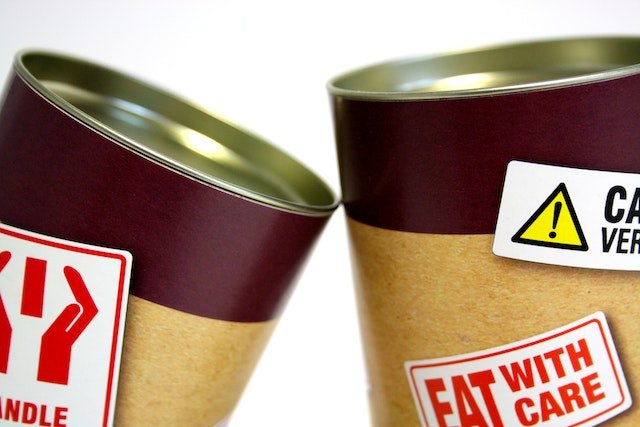
- Broken seals
- Damaged packaging
- Swollen jars
- Dented cans
- Torn pouches
If the packaging appears damaged in any way, avoid buying it.
Storage Instructions
Some baby foods require refrigeration after opening, while others should be consumed within a specific number of hours.
Always follow the manufacturer’s storage instructions to reduce the risk of food contamination.
Understanding the Nutrition Facts Panel
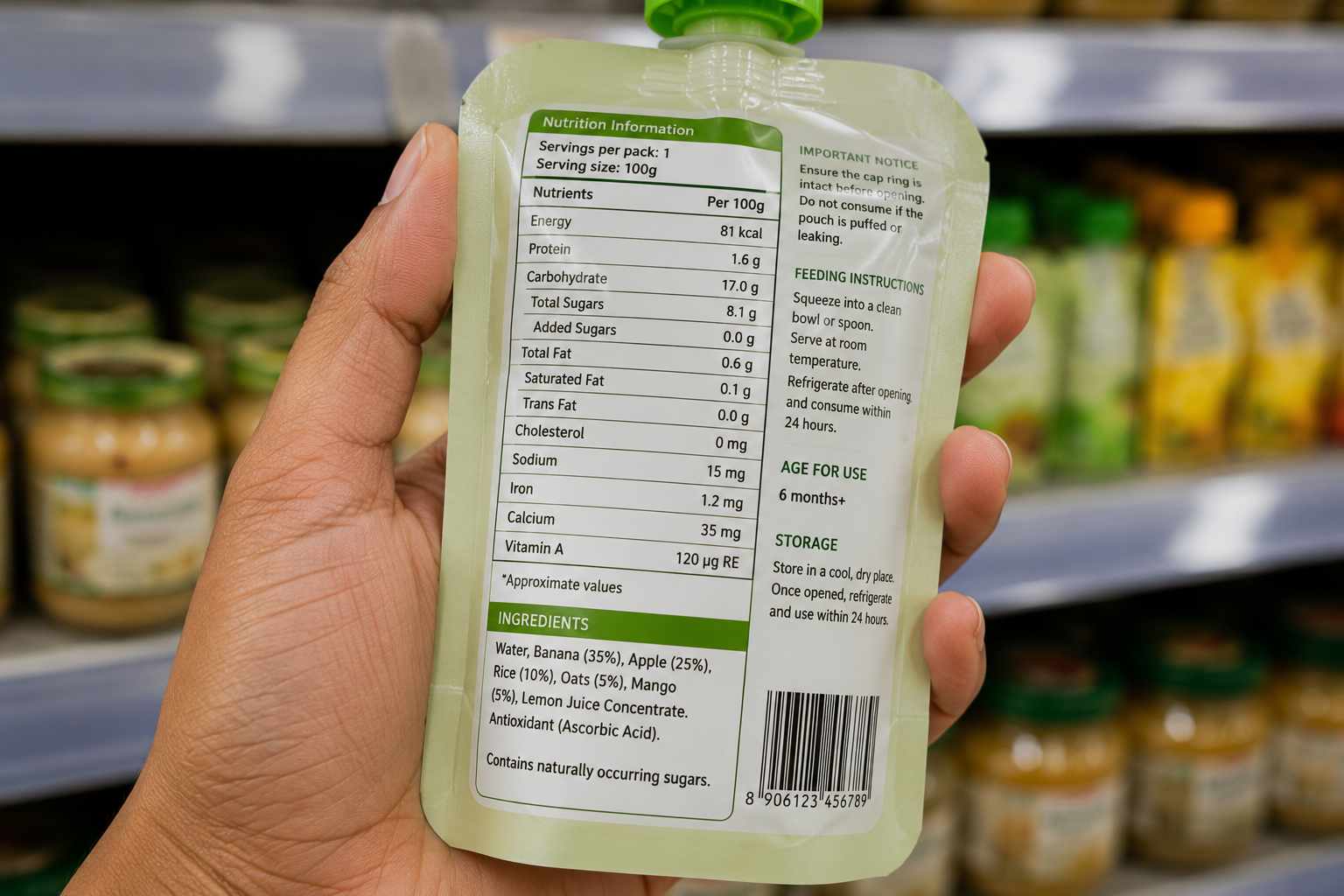
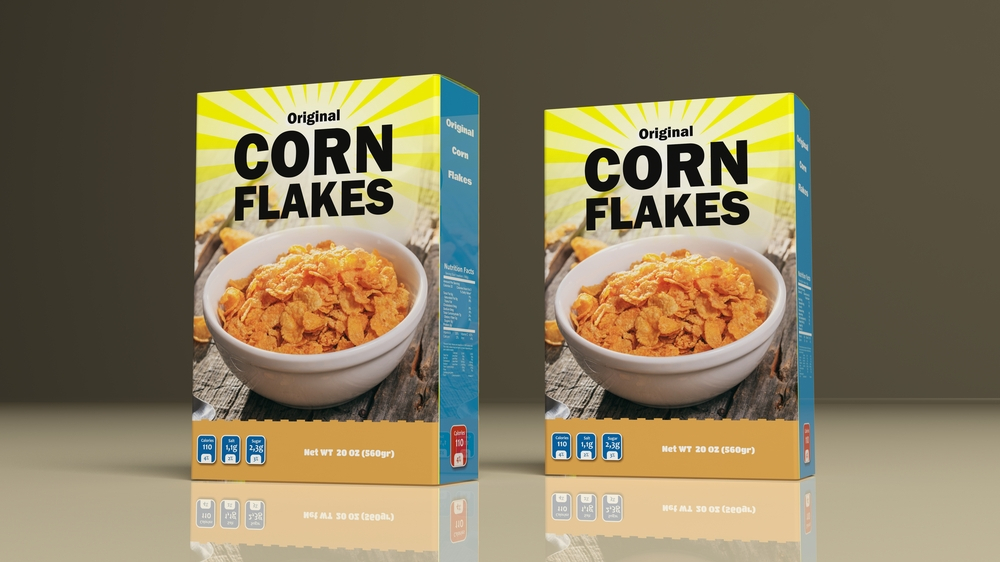
The Nutrition Facts panel provides valuable information about what’s inside the package. While it may look complicated at first, understanding a few key elements can help you make healthier choices for your baby. Parents in India can also refer to the Food Safety and Standards Authority of India (FSSAI) for guidance on understanding food labels and making informed food choices.
Calories
Calories indicate how much energy a serving provides. Babies need enough calories to support their rapid growth, but the focus should be on obtaining those calories from nutritious ingredients rather than foods high in added sugars.
Remember that calories alone don’t determine whether a food is healthy. Always review the ingredient list and nutritional value together.
Protein
Protein supports your baby’s growth, muscle development, and tissue repair.
Good sources include:
- Lentils
- Milk
- Yogurt
- Eggs
- Oats
- Whole grains
When choosing packaged foods, look for products that contain naturally protein-rich ingredients instead of relying heavily on refined starches.
Healthy Fats
Healthy fats play an important role in brain development during infancy.
Look for ingredients such as:
- Avocado
- Oats
- Milk
- Natural nut powders (when age-appropriate)
- Seeds (if suitable)
Avoid products containing excessive saturated fats or unnecessary hydrogenated oils.
Sugar
One of the most important things parents should check is the sugar content.
Some packaged baby foods naturally contain sugars from fruits, while others include added sweeteners that provide little nutritional value.
Choose products with:
- No added sugar
- Naturally occurring fruit sugars
- Whole fruit ingredients listed first
Limiting added sugar early in life helps children develop healthier eating habits and reduces their preference for overly sweet foods.
Sodium
Babies need only a very small amount of sodium.
Too much sodium may place unnecessary strain on developing kidneys and encourage a preference for salty foods later in life.
Choose products with lower sodium whenever possible.
Iron and Calcium
Iron supports healthy brain development and helps prevent iron deficiency, while calcium contributes to strong bones and teeth.
If your baby regularly eats packaged foods, choose products that provide these important nutrients as part of a balanced diet.
Hidden Names of Sugar Parents Should Know
Many parents look only for the word “Sugar” on the label. However, manufacturers may use several different names for sweeteners.
Some common examples include:
- Brown sugar
- Cane sugar
- Cane juice
- Corn syrup
- Glucose syrup
- Rice syrup
- Malt syrup
- Fructose
- Dextrose
- Maltodextrin
If several types of sugar appear in the ingredient list, the product may contain more added sugar than you expect. Remember that ingredients listed near the beginning of the ingredient list are present in larger quantities.
Ingredients Parents Should Avoid
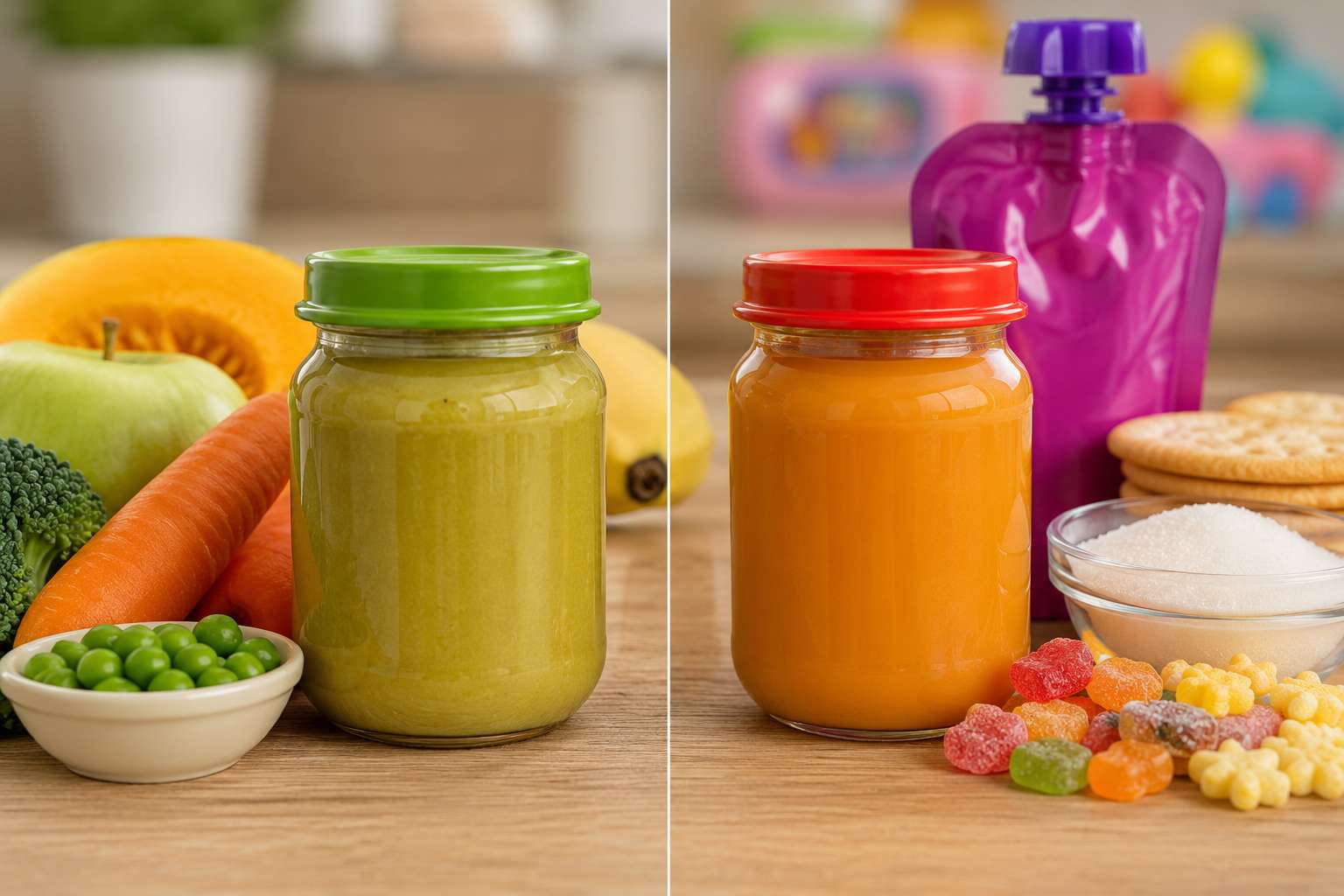
Not every packaged baby food is unhealthy, but it’s important to recognize ingredients that should be limited whenever possible.
Artificial Colours
Artificial food colours improve appearance but provide no nutritional benefit.
Choosing products made with natural ingredients is generally a better option.
Artificial Flavours
Many babies enjoy the natural taste of fruits and vegetables without artificial flavouring.
Introducing natural flavours early may help encourage healthier eating habits.
Excess Added Sugar
Foods high in added sugar can reduce appetite for healthier foods and increase a child’s preference for sweet flavours. Choose products where fruit or vegetables appear before any sweeteners in the ingredient list. The World Health Organization (WHO) recommends limiting free sugar intake throughout life and encouraging healthy eating habits from an early age to support long-term health.
Excess Sodium
Some snacks marketed for toddlers contain surprisingly high amounts of salt.
Compare products and choose lower-sodium alternatives whenever possible.
Unnecessary Preservatives
Preservatives help extend shelf life, but products with shorter ingredient lists are often a better choice when they meet your baby’s nutritional needs.
Organic vs Natural: What’s the Difference?
Parents often assume that products labelled “Natural” or “Organic” are always healthier.
However, these terms don’t mean the same thing.
Organic
Organic foods are produced according to specific farming and production standards.
Depending on your country, they may be certified by an approved regulatory authority.
Natural
The word “Natural” does not necessarily mean the product is free from added sugar, preservatives, or processing.
Always read the ingredient list instead of relying only on front-of-package claims.
Which Should You Choose?
Rather than choosing products based solely on marketing terms, compare:
- Ingredient quality
- Nutritional value
- Sugar content
- Sodium content
- Age suitability
The healthiest choice is usually the product with simple, recognizable ingredients and minimal unnecessary additives.
Marketing Claims That Can Mislead Parents
Packaging is designed to attract attention, but some claims may give a healthier impression than the product deserves.
Here are a few examples:
“Made with Real Fruit”
This doesn’t always mean the product contains mostly fruit.
Check the ingredient list to see how much fruit is actually included.
“No Added Sugar”
Although no sugar may have been added during processing, the product can still contain naturally concentrated fruit sugars.
Review both the ingredient list and nutrition facts panel.
“Multigrain”
A product labelled “Multigrain” isn’t automatically healthier.
Whole grains listed near the top of the ingredient list are generally a better sign than refined grains.
“Natural Ingredients”
Natural ingredients can still be highly processed.
Always focus on the complete ingredient list instead of marketing claims.
“Fortified with Vitamins”
Added vitamins can be beneficial, but they don’t automatically make a product healthy if it also contains excessive sugar or sodium.
Evaluate the product as a whole rather than relying on a single claim.
Common Mistakes Parents Make While Buying Packaged Baby Food
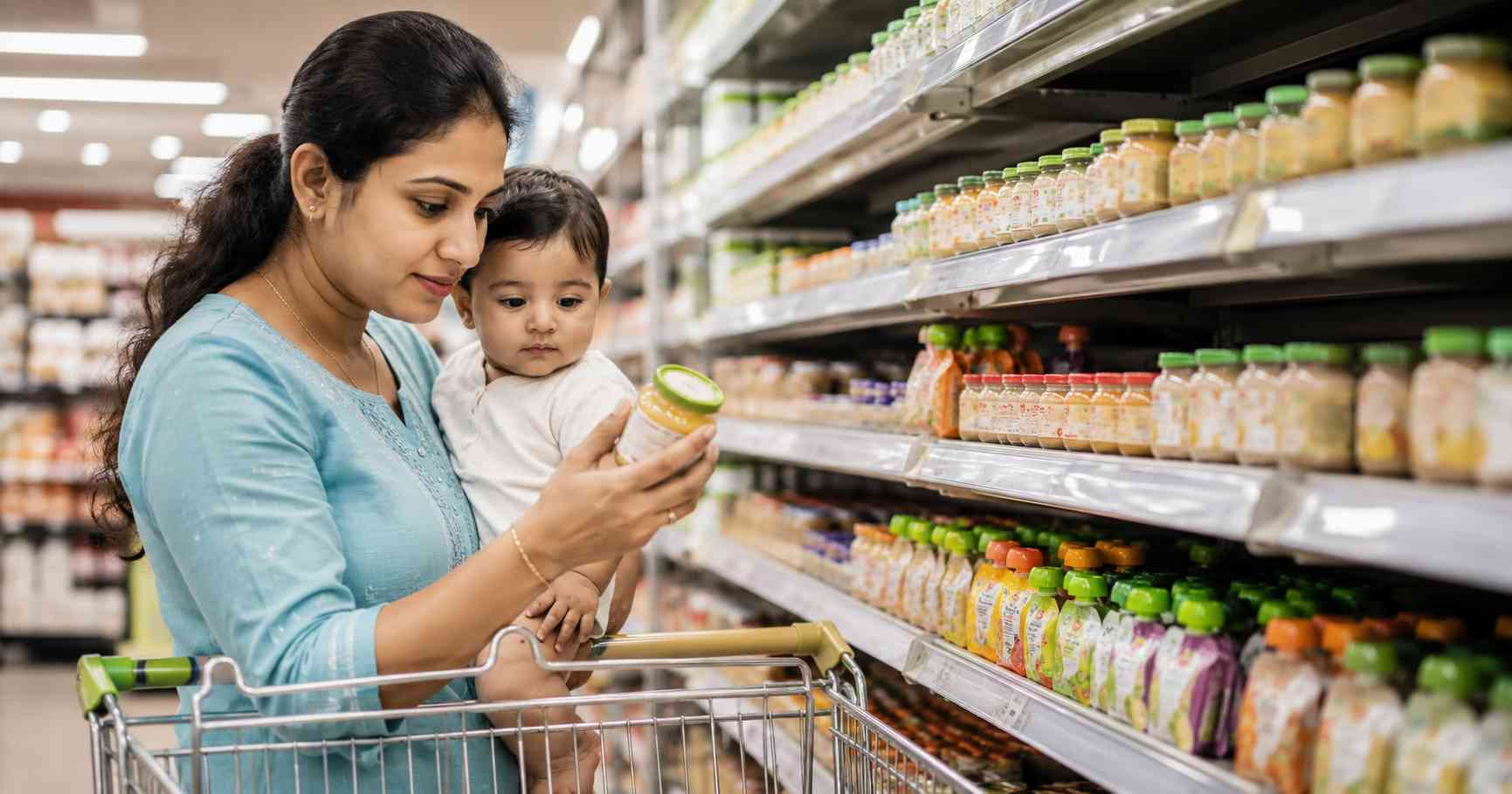
Many parents make purchasing decisions quickly, especially during busy shopping trips.
Here are some common mistakes to avoid.
Buying Based Only on the Front Label
The front of the package is designed for marketing.
The ingredient list tells the real story.
Ignoring Serving Size
Parents sometimes assume the entire pouch or jar represents one serving.
Always check the serving size before comparing products.
Assuming Expensive Means Better
Higher price doesn’t always indicate better nutrition.
Compare labels rather than brands.
Forgetting to Check Expiry Dates
Always inspect expiry dates, packaging seals, and storage instructions before purchasing.
Buying Too Many Flavoured Foods
Babies benefit from learning the natural taste of fruits and vegetables.
Offering a wide variety of simple foods helps build healthy eating habits.
Baby Food Label Checklist Every Parent Should Follow
Shopping for baby food becomes much easier when you know exactly what to look for. Use this simple checklist every time you buy packaged baby food.
Check the recommended age
Always choose products that match your baby’s developmental stage.
Read the ingredient list first
Ingredients are listed in descending order by weight. Look for products where fruits, vegetables, whole grains, or other wholesome ingredients appear first.
Check for added sugars
Avoid products containing multiple forms of added sugar, such as corn syrup, glucose syrup, cane sugar, or maltodextrin.
Compare sodium levels
Choose products with lower sodium whenever possible, especially for younger babies.
Look for important nutrients
Iron, calcium, protein, and healthy fats are important nutrients that support your baby’s growth and development.
Check expiry dates
Never buy products that are close to expiry or have damaged packaging.
Follow storage instructions
Always store opened baby food according to the manufacturer’s instructions and discard leftovers when recommended.
Compare similar products
Don’t buy the first product you see. Comparing labels can help you choose healthier options with better ingredients.
How to Choose the Best Packaged Baby Food
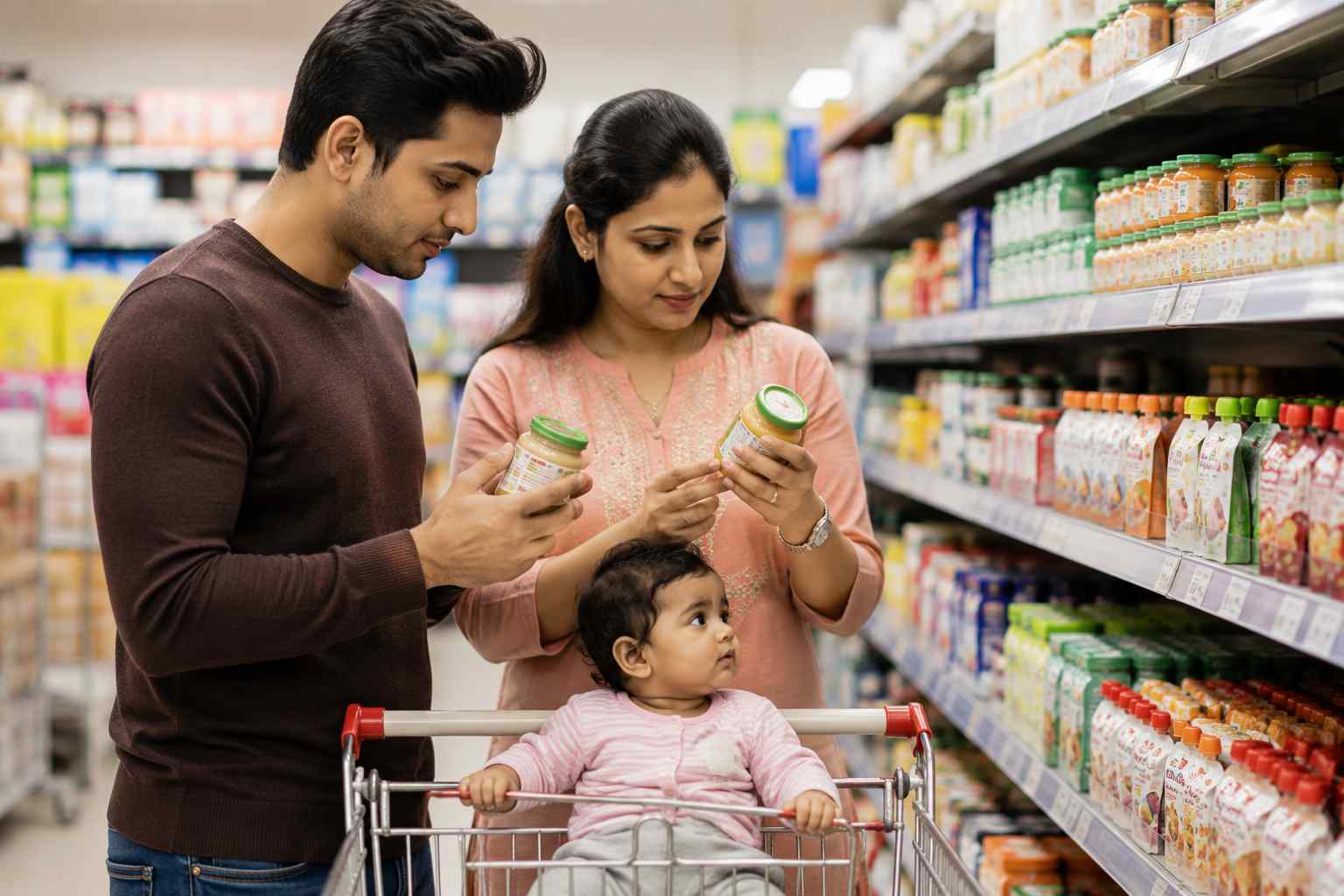
Packaged baby foods can be a convenient option when travelling or during busy days, but they should complement—not replace—a balanced diet that includes fresh, home-prepared foods whenever possible. If you’re breastfeeding or expressing milk, you may also find our guide on basic of expressing breastmilk helpful when planning your baby’s early feeding journey.
When comparing products, choose those that:
- Contain recognizable ingredients.
- Include vegetables or fruits as the first ingredients.
- Have little or no added sugar.
- Are low in sodium.
- Contain no unnecessary artificial colours or flavours.
- Match your baby’s age and developmental stage.
Remember that every baby is different. If your child has allergies, food intolerances, or special dietary needs, consult your pediatrician before introducing new packaged foods. UNICEF also recommends offering babies a variety of safe, nutritious, and age-appropriate foods while introducing complementary feeding to support healthy growth and development.
Frequently Asked Questions
Is packaged baby food safe?
Yes. Reputable manufacturers follow food safety standards. However, parents should always read labels carefully, check expiry dates, inspect packaging for damage, and follow storage instructions.
Is homemade baby food better than packaged baby food?
Homemade baby food allows parents greater control over ingredients and freshness. Packaged baby food can still be a convenient option when chosen carefully and used as part of a balanced diet.
What ingredients should I avoid in baby food?
Look for products with minimal added sugar, lower sodium, and fewer unnecessary artificial colours or flavours. Reading the ingredient list is one of the best ways to make informed choices.
Is organic baby food healthier?
Organic baby food may appeal to some families, but the ingredient list and nutritional value remain the most important factors. A product labelled “organic” isn’t automatically healthier than other well-balanced options.
Should I avoid preservatives completely?
Not all preservatives are harmful. Some are used to maintain food safety and quality. Rather than avoiding products based on a single ingredient, evaluate the overall nutritional profile and ingredient list.
Can I give packaged baby food every day?
Packaged baby food can be included as part of your baby’s diet, but a variety of fresh, home-prepared foods is generally recommended to encourage diverse tastes and textures.
How can I identify hidden sugars?
Check the ingredient list for names such as glucose syrup, corn syrup, maltodextrin, cane sugar, rice syrup, or fructose. Products containing several sweeteners may have more added sugar than expected.
Why is serving size important?
Serving size helps parents understand the nutritional information provided on the label and compare similar products accurately. It doesn’t necessarily indicate how much your baby should eat at one meal.
Final Thoughts
Understanding baby food packaging labels doesn’t have to be confusing. By taking a few extra moments to read the ingredient list, nutrition facts panel, serving size, and age recommendations, parents can make more informed decisions about the foods they offer their children.
Rather than relying on attractive marketing claims, focus on products with simple, wholesome ingredients, minimal added sugar, appropriate nutrient levels, and clear labeling. Developing this habit early not only supports your baby’s healthy growth but also helps build positive eating habits that can last a lifetime.
Remember that packaged baby food is only one part of a balanced diet. Fresh fruits, vegetables, whole grains, and home-prepared meals continue to play an important role in your child’s nutrition and overall well-being. With a little practice, reading baby food packaging labels becomes a simple habit that helps you make healthier choices and gives your child the best possible nutritional start in life.
Parents should also learn practical food safety rules every young child should learn to reduce the risk of foodborne illnesses.
Medical Disclaimer: This article is intended for educational purposes only and should not replace professional medical or nutritional advice. Every child has unique dietary needs, and parents should consult a qualified pediatrician or registered dietitian before making significant changes to their baby’s diet or introducing new foods, especially if allergies or medical conditions are a concern.